
What Is Plasma?
Plasma is a high-energy phase of matter made up of charged particles, including positive ions and free electrons. Unlike solids, liquids, and gases, plasma does not have a definite shape or volume and behaves differently because of its electrical properties. Plasma forms when a gas gains so much energy that its atoms lose electrons. Although plasma is less common on Earth, it is the most abundant phase of matter in the universe. Stars, including the Sun, are primarily made of plasma.

Particle Arrangement and Movement in Plasma
In plasma, particles move freely and very quickly, similar to a gas, but with an important difference: many of the particles are electrically charged. Because of these charges, plasma responds strongly to electric and magnetic fields. The high energy of plasma allows electrons to separate from their atoms, creating a mixture of ions and free electrons. This gives plasma unique behaviors, such as the ability to conduct electricity and produce light.

Properties of Plasma
Plasma has several distinct properties that set it apart from other phases of matter. It conducts electricity, generates magnetic fields, and often emits light due to the movement of excited particles. Plasma can also form complex structures under the influence of magnetic forces. Examples of plasma include lightning, neon signs, auroras, and the surface of the Sun. Because of its charged particles, plasma can be shaped and controlled using magnetic and electric fields in scientific and industrial applications.

How Plasma Forms and Changes Phase
Plasma forms when a gas absorbs a large amount of energy, such as from extreme heat or strong electrical forces. This added energy causes electrons to break away from atoms, creating ionization. If plasma loses energy, the charged particles can recombine into neutral atoms, turning back into a gas. This process shows that plasma is closely related to the gas phase but exists at much higher energy levels. The transition between gas and plasma depends primarily on temperature and energy input.
Importance of Plasma in Everyday Life and Science
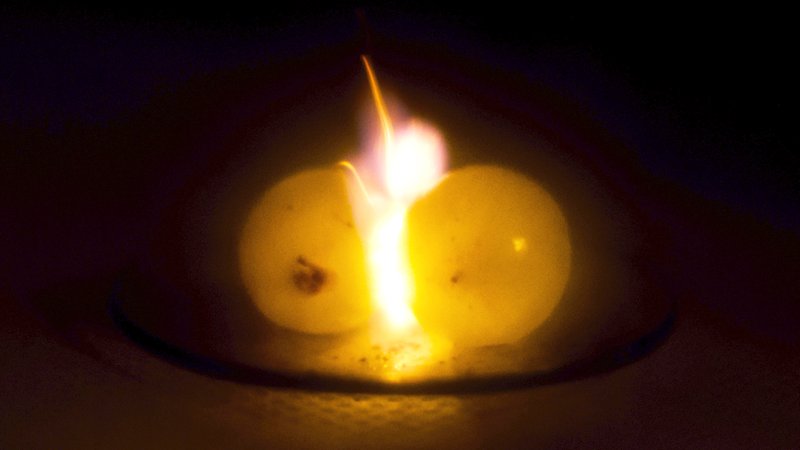
Although plasma is not as common as solids, liquids, or gases in daily life, it plays a major role in science and technology. Plasma is used in fluorescent lights, plasma TVs, and certain types of cutting and welding tools. In medicine, plasma technology helps sterilize equipment. Scientists also study plasma to better understand space, stars, and the possibility of nuclear fusion as a future energy source. Because plasma makes up most of the visible universe, understanding it helps expand knowledge of both Earth and outer space.